Single-Test Volume
How many visits involve one test? Reviewing your own laboratory records gives a clear, objective baseline of patient flow and transactional patterns.

A guided face scan can be explored as an optional patient-preparation step at a diagnostic laboratory. Its role is to help patients organise visual information and questions for a clinician. A face scan does not determine the right test order. Test selection remains a clinical decision based on symptoms, history, examination and appropriate evidence.
For laboratory leaders considering diagnostic lab AI, the useful starting point is a defined workflow and a measurable question. Can an optional preparation activity help patients communicate their concerns without disrupting registration, sample collection or reporting? That is something a pilot can evaluate, rather than a benefit to assume.
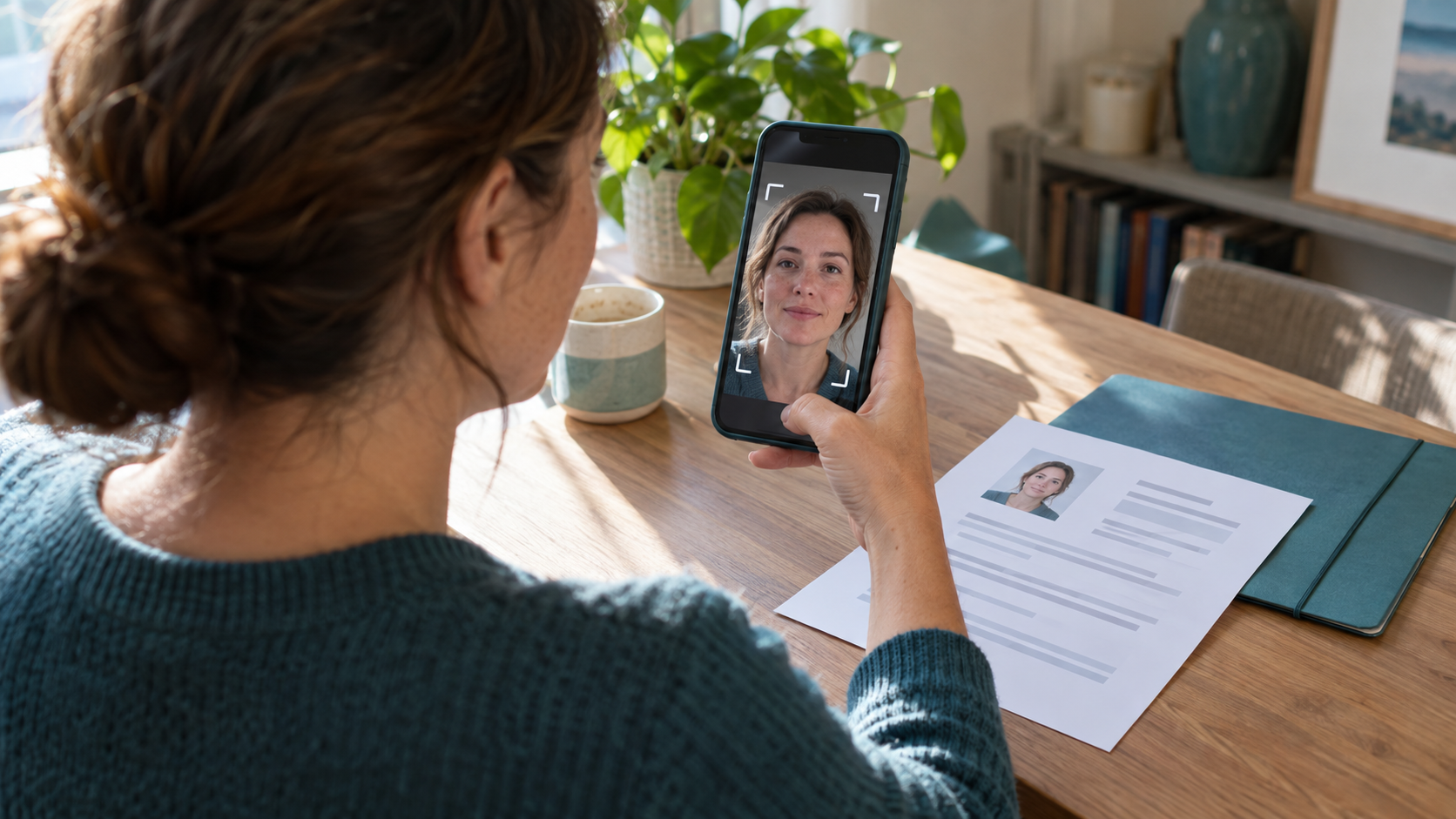
Illustrative cover image • Non-diagnostic patient preparation workflow
Patient Engagement Reality
Some patients arrive with a prescription for one test, provide a sample and leave. The laboratory can complete that order successfully while the patient still has questions about preparation, results or follow-up. A completed transaction does not necessarily mean every information need has been addressed.
How many visits involve one test? Reviewing your own laboratory records gives a clear, objective baseline of patient flow and transactional patterns.
How many patients return within a defined period? Measuring return rates reveals whether patients receive appropriate, clinically indicated continuity of care.
What questions do patients ask at registration and after receiving results? These checkable observations help a laboratory truly understand its setting.
A single-test visit is not automatically a missed sales opportunity. One test may be exactly what the clinician ordered and all that the patient needs. The aim should be clearer communication and appropriate follow-up, rather than increasing the number of tests on every invoice.
Lab Patient Acquisition: This distinction matters for lab patient acquisition as well. A useful service gives patients a reason to understand and remember the laboratory without turning visible concerns into an unsupported recommendation for additional testing.
Front-Desk & Workflow Boundaries
Discounted packages, community health events and appointment reminders serve different purposes. A package can explain available services. A community event can introduce people to a laboratory. A reminder can help someone remember an existing appointment or a follow-up their clinician has recommended.
None of those activities, by itself, explains an individual patients concern. A person who says they feel tired may need a conversation with a clinician before any decision about testing. A photograph or facial observation cannot supply that missing clinical assessment.
Front-desk teams also need clear boundaries. Their responsibilities may include registration, directions and explaining the collection process. An optional digital activity should not require them to interpret health findings or recommend tests beyond their role.
Operational Setting
One possible pilot setting is the period after registration and before sample collection, where the laboratory has confirmed that patients have enough time and privacy. A designated staff member could explain the optional activity and direct a consenting patient to the supported FaceEcho application on a suitable device.
Offered as an optional step after registration and before collection, where patient time and privacy are confirmed.
Consenting patient completes guided capture using the supported FaceEcho app on a suitable device.
AI-assisted analysis presents visible observations in a report for the user to review, not a test order or diagnosis.
The patient manually shares the report with a clinician through an accepted method, without automatic LIS transfer.
Voluntary Participation & Non-Interference: Participation should be voluntary. Patients should understand what information is collected, who can access it and how it will be handled. Declining the activity should not affect their ordered tests or standard service. Staff need a clear route for referring clinical questions to an appropriately qualified professional.
Home Collection Considerations: Before offering the process during home collection, the laboratory would need to confirm suitable devices, staff responsibilities, patient privacy and the time available. A home visit is a possible setting to evaluate, not a confirmed deployment or a promise that the activity adds negligible time.
Pilot Assessment Framework
Six key areas provide an objective, realistic evaluation plan for a laboratory pilot, without assuming unverified benefits.
A pilot may examine whether clearer information leads patients to complete follow-up that a clinician has recommended. It should not treat additional tests as inherently beneficial. Any revenue effect is an outcome to measure, not an established FaceEcho result or a reason to make unsupported recommendations.
A laboratory could assess whether participants return for clinically indicated follow-up and whether they understand the next steps. A repeat scan should not be presented as necessary monitoring or as a reason to purchase testing when there is no clinical indication.
Ask whether patients understood the activity, felt able to decline and found the resulting information useful. Record confusion and complaints as well as positive feedback. An optional activity is worthwhile only if it fits the service and respects the patients needs.
The laboratory and FaceEcho team can agree which pilot measures are feasible to collect. Possible measures include invitations, consent, completion, staff time and patient feedback. Follow-up bookings should only be included where they can be recorded appropriately. This is an evaluation plan, not a claim that FaceEcho already supplies a laboratory analytics dashboard.
Any study comparing facial observations with laboratory results requires a separate research plan, appropriate review, consent and data arrangements. Taking part in a service pilot does not automatically authorise research use. Data should not be described as anonymous unless the relevant handling method supports that description.
A laboratory can explore whether patients value a clearer preparation process. Describe the service accurately and explain its limits. Offering a digital activity does not establish clinical superiority, diagnostic performance or that the laboratory is the first in its area to provide it.
Structured Protocol
A useful pilot begins with an agreed objective, a participating location, a duration, named responsibilities and a suitable evaluation method. The start date, devices, training, support and reporting arrangements should be confirmed with the participating organisations before they are advertised.
Choose measures that answer the original question. If the objective is better preparation, assess what patients understood and what information clinicians found useful. If the objective is operational fit, record completion and staff time, including interruptions. Compare results with an appropriate baseline and describe the limits of the evaluation.
The team should also define when the activity stops. Technical problems, patient confusion or pressure on the collection queue should have an agreed response. A pilot should generate useful evidence about feasibility, including reasons the process may not suit a particular location.
Frequently Asked Questions
Direct answers on limits, workflows, clinician roles, and pilot evaluation.
No. Facial observations alone do not establish the cause of symptoms or determine an appropriate test order. A clinician makes testing decisions using the relevant clinical information and evidence.
No. A guided facial scan does not replace a sample-based laboratory test, a physical examination or professional judgment. Its proposed role in this workflow is to help patients prepare information for discussion.
This workflow assumes that the user manually shares the report through an accepted method. Automatic access, QR-based scanning, laboratory integrations and analytics should only be described where those capabilities have been separately confirmed.
Agree the objective and measurement method before launch. Evaluate participation, usefulness, staff effort and any relevant follow-up without assuming diagnostic accuracy, time savings or revenue gains. Report limitations alongside results.
Partnership & Evaluation
Laboratory leaders interested in this approach can visit https://faceecho.ai/ to contact the FaceEcho team and discuss a potential pilot. The discussion should establish the current capabilities, the proposed workflow and the evidence the evaluation would need to produce.